M-Pesa Phone Number Privacy Kenya (2026): What Businesses Must Do Now
The M-Pesa phone number privacy Kenya update (2026) has significantly changed how businesses receive and track payments. Safaricom now hides sender phone numbers in transaction messages, making it harder to identify customers directly.
While this move improves user privacy, it also creates new challenges for businesses that rely on M-Pesa for daily transactions. If you run a business in Kenya, this change affects your payment verification, customer communication, and overall operations.
In this guide, we explain what changed, how it affects you, and why investing in a website with domain and hosting in Kenya is now essential.
—
M-Pesa Phone Number Privacy Kenya: What Changed in 2026
Before 2026:
Businesses could see full customer phone numbers
It was easy to confirm payments and follow up
After the update:
Phone numbers are partially hidden
Identifying customers is no longer straightforward
Businesses must rely on alternative systems
This update was introduced to:
Protect user data
Reduce fraud and spam
Align with Kenya’s data protection laws
—
How the M-Pesa Privacy Update Affects Businesses
1. Difficult Payment Verification
Without full phone numbers, matching payments to customers becomes harder.
2. Reduced Customer Communication
You can no longer easily call or message customers directly from M-Pesa transactions.
3. Increased Operational Confusion
Customers may send payments without identification, leading to delays and errors.
—
Why You Need a Website More Than Ever
The M-Pesa phone number privacy Kenya update shows that relying only on mobile payments is risky.
A website helps you:
Collect full customer details (name, email, phone)
Track orders and payments automatically
Improve professionalism and trust
With a proper system, you are no longer dependent on M-Pesa messages alone.
—
Best Web Hosting in Kenya for M-Pesa Businesses
To build a reliable system, you need:
1. Domain Registration in Kenya
A domain name is your online identity. It makes your business look professional and helps customers find you easily.
2. Reliable Hosting in Nairobi
Good hosting ensures:
Fast website loading speed
99.9% uptime
Secure data storage
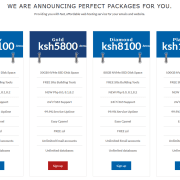
If you are looking for the best web hosting in Kenya, choosing a reliable provider ensures your website runs smoothly without downtime.
—
How a Website Solves M-Pesa Limitations
Here’s how your website fixes the challenges:
Hidden numbers → Customer fills a form
Unknown payments → Orders linked to users
Manual tracking → Automated systems
Poor communication → Email & SMS integration
This makes your business more efficient and scalable.
—
Cheap Web Hosting Kenya: Affordable Solutions for Businesses
Many business owners think websites are expensive—but that’s not true.
Today, you can get:
Cheap web hosting Kenya packages
Affordable domain registration
Easy-to-manage websites
This means even small businesses can go digital and compete effectively.
—
Steps to Adapt Your Business Today
Step 1: Register Your Domain
Choose a name that represents your business.
Step 2: Get Domain and Hosting in Kenya
Pick a reliable hosting provider for speed and security.
Step 3: Build Your Website
Create pages where customers can:
Place orders
Enter their details
Make payments
Step 4: Optimize for SEO
Use keywords like:
best web hosting in Kenya
domain registration in Kenya
—
Future of Business in Kenya
The M-Pesa phone number privacy Kenya update is just the beginning.
Businesses are moving towards:
Digital systems
Data privacy compliance
Automated customer management
Those who adapt early will gain a competitive advantage.
—
Frequently Asked Questions About M-Pesa Privacy Update
When did M-Pesa start hiding phone numbers in Kenya?
M-Pesa began rolling out phone number privacy features in March 2026.
Why is Safaricom hiding phone numbers?
To improve privacy, reduce fraud, and comply with data protection laws.
How can businesses identify customers now?
By using websites with domain and hosting in Kenya to capture customer details.
Do I need a website for my business?
Yes. A website helps you manage payments, customers, and grow your business online.
The M-Pesa phone number privacy Kenya update (2026) has changed how businesses operate. While it improves customer privacy, it requires businesses to adopt better systems.